
AI Workload Distribution Platforms: Comparative Guide
Compare AWS SageMaker, Azure ML, Vertex AI, Apache Airflow and Anyscale on features, pricing, scalability and best use cases.

Compare AWS SageMaker, Azure ML, Vertex AI, Apache Airflow and Anyscale on features, pricing, scalability and best use cases.

Compare five top AI workflow platforms for multi-agent orchestration—tradeoffs in scalability, state persistence, cost, and prototyping speed.
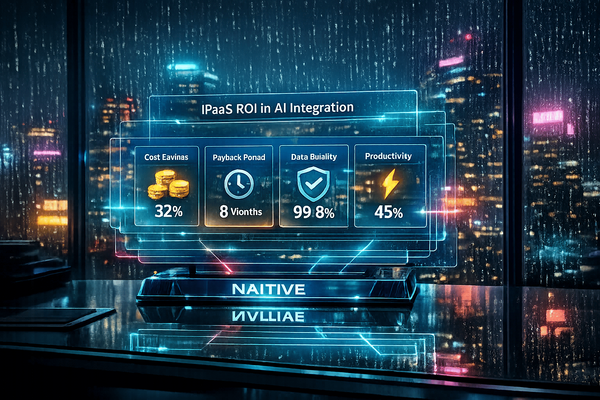
Practical iPaaS metrics for AI: cost savings, payback period, data quality, and productivity to quantify ROI.
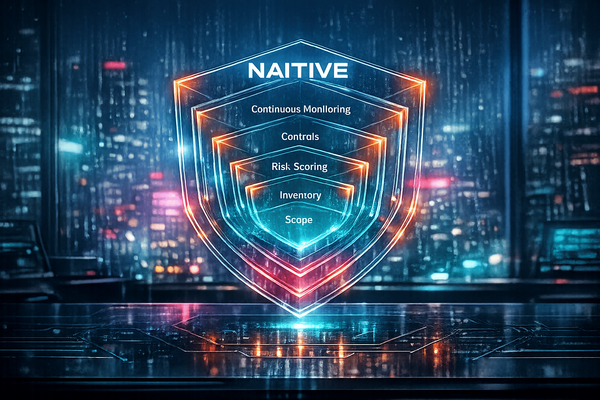
Six-step framework to assess and secure AI agents: scope, inventory, threat testing, risk scoring, controls, and continuous monitoring.

Combining visual inputs and gesture recognition to create intuitive, touchless AI for healthcare, AR/VR, and manufacturing.

Guide to 10 AI ROI metrics: labor savings, automation, revenue attribution, accuracy, scalability, and sustainability.

Compare Kubernetes and Docker Swarm for AI monitoring—autoscaling, GPU support, observability, costs, and best-use scenarios.

Voice AI case studies showing rapid ROI, large cost and time savings, and improved patient experience.
24/7 Voice AI for law firms that boosts lead capture, automates intake and transcription, ensures SOC 2-level security, and delivers fast ROI.

Secure multi-agent AI with identity controls, least privilege, operational boundaries, inter-agent validation, monitoring, and cryptographic approvals.

Autonomous agents demand strict inventory, short-lived identities, AES/TLS encryption, continuous monitoring, and layered defenses to prevent breaches.

Proactively detect AI risks using stakeholder input, continuous monitoring, and predictive analytics to prevent breaches and bias.

How to build AI incident playbooks: set severity tiers, assign roles, deploy kill switches, contain incidents, and meet compliance.

Practical guidance for building compliant AI in healthcare, finance, and energy—covering transparency, human oversight, secure logging, encryption, and phased deployment.

Five common real-time AI failures—blind spots, weak testing, poor data, legacy integration, and missing monitoring—and clear, practical fixes to scale safely.

Federated learning keeps sensitive data on-device, combining differential privacy, secure aggregation, and gradient techniques to build privacy-first AI.

Enterprise Voice AI agents cut contact center costs, reduce handle time, recover missed revenue, and deliver fast payback with high ROI.

You are presented with a Fortune report by Nick Lichtenberg that centers on Morgan Stanley’s forecast of a massive AI breakthrough in the first half of 2026, highlighting the world’s readiness to absorb this paradigm shift. This breakthrough is framed as the result of an unprecedented accumulation of
Diving into AI agent evaluation was initially daunting for me — years ago, I recall wrestling with fuzzy metrics, inconsistent tool outputs, and user complaints that felt impossible to pin down. But working alongside industry partners and through projects like developing Claude Code at Anthropic reshaped my approach entirely. Rigorous, systematic
AI Voice Agents
A prospect Googles "financial advisor near me" on a Sunday afternoon. They call four firms from the results page. Three go to voicemail. One answers. You already know who gets the meeting. The Problem Every Advisory Practice Has But Nobody Advertises Financial advisors are extraordinarily good at what
AI Voice Agents
If you run a medical office, you already know the problem. It's 8:47 AM on a Monday. Three lines ringing at once. Appointment confirmations. Prescription refill requests. Insurance questions. Your front desk staff is spending 60% of their time answering calls that follow the same five scripts.
AI Voice Agents
Every Friday night at 9:47 PM, someone calls your restaurant to book a table for Saturday. You're slammed. The line is backed up. The host is seating a six-top. Nobody picks up. The caller hangs up after four rings — and books at the place across the street.
Law Firms
AI Phone Agents for Law Firms: How Attorneys Are Winning the Intake War (While Their Competition Sleeps) It's 9:47 PM on a Thursday. A potential client just got served divorce papers. They're scared, they're searching, and they're calling every family law
Bilingual AI
The Bilingual AI Voice Agent: An Untapped Competitive Advantage in Orange County and Los Angeles There are 4.8 million Spanish-speaking residents in Los Angeles County. Orange County adds another 800,000+. That's over 5.5 million potential customers in the region who prefer — or in many cases