AI Ethics Certification for Government Employees
Overview of AI ethics certification for government employees: courses, exams, bias mitigation, regulatory compliance, career paths, and program formats.
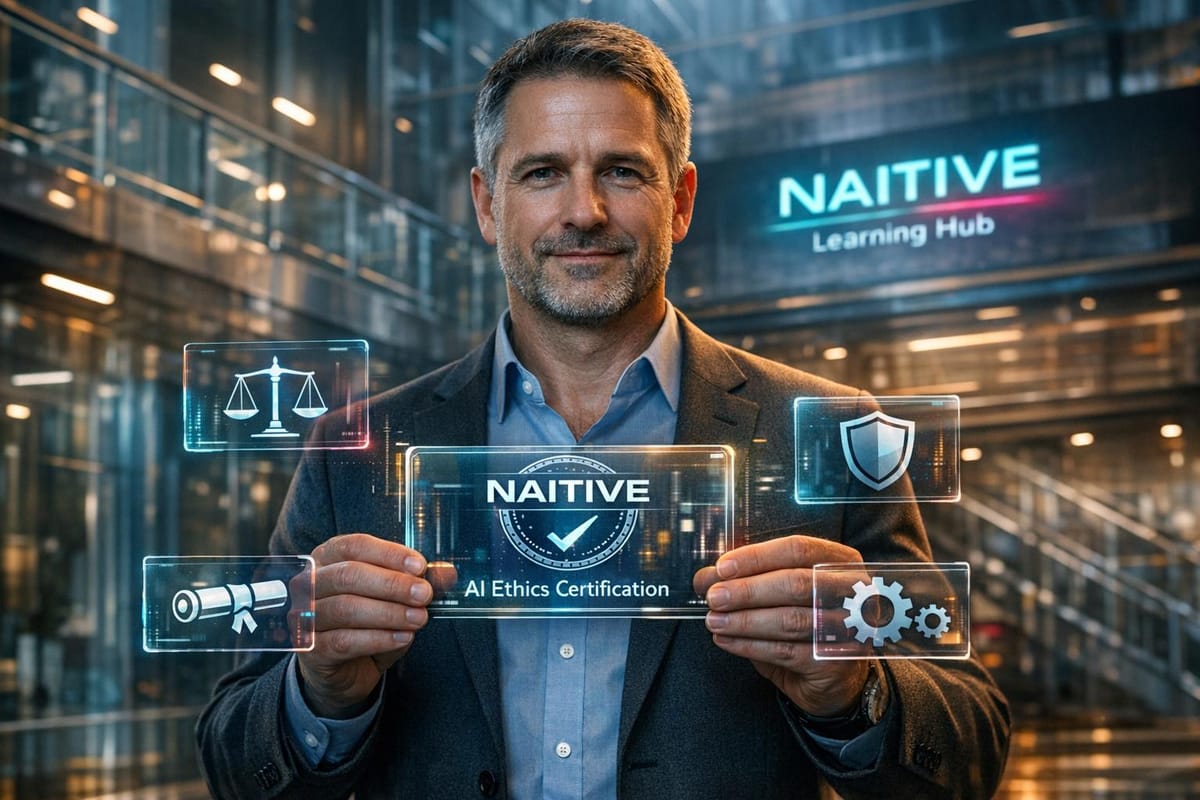
AI ethics certifications are becoming essential for government employees working with artificial intelligence. These programs train staff to address ethical challenges, reduce risks, and comply with regulations while managing AI systems. Here's what you need to know:
- Purpose: Teach employees how to handle bias, ensure transparency, and protect privacy in AI systems.
- Key Focus Areas: Ethical principles, regulatory compliance, and practical skills like documenting decisions and mitigating risks.
- Why It Matters: The federal government is using AI in over 1,700 applications, doubling in just one year. Certified employees help ensure responsible AI use and build public confidence.
- Career Opportunities: Certification opens doors to roles like Chief AI Officer and positions on AI governance teams.
- Program Details: Courses range from one week to six weeks, with flexible formats and exams or projects for certification.
AI ethics certification is not just a requirement - it's a step toward ensuring responsible AI deployment in government operations.

AI Ethics Certification for Government Employees: Key Statistics and Program Overview
Benefits of AI Ethics Certification in Government
Reducing Risks in AI Deployment
Certification programs equip government professionals with the tools to spot and address risks early. This includes identifying unintended bias during critical phases like data collection, feature extraction, and model selection - issues that can compromise accuracy or harm individuals. Certified staff are trained to establish documented review schedules to monitor for natural data drift and model drift, ensuring AI performance remains reliable as operational conditions evolve.
The training bridges the gap between high-level frameworks, such as the NIST AI RMF, and practical, actionable steps for managers and third-party evaluators. This is vital, as 80% of organizations now have dedicated risk functions for managing AI and generative AI systems. These roles address the socio-technical risks that arise from the interplay between algorithms and human behavior. Certified professionals are also prepared to identify when human oversight is essential, especially in decisions that impact constitutional rights or civil liberties. By taking these steps, governments can establish a foundation for transparent and responsible AI practices.
Building Public Trust in Government AI Programs
With over 1,700 AI use cases currently active across U.S. government agencies - a figure that doubled in just one year - ensuring public accountability is more important than ever. Certified professionals enhance transparency by maintaining public resources like the AI Use Case Inventory, which provides citizens with clear insights into how AI is being used and managed by their government.
The General Services Administration's AI Compliance Plan, introduced in September 2025, supports the AI Training Act and strengthens public trust by fostering a capable, modern workforce. Certification also prepares staff to implement Zero Trust architectures, which include tamper-proof audit trails to verify AI decision-making and authorization processes.
"The federal government cannot afford to be reactive to [AI's] complexities, risks, and societal consequences... a critical mass of workforce expertise is needed to enable federal agencies to accelerate the delivery and adoption of AI." - GAO
Career Growth in AI Governance
AI ethics certification doesn’t just help mitigate risks or build public trust - it also opens doors for professionals looking to advance their careers. Certification paves the way for new governance roles like Chief AI Officer (CAIO) and positions on AI Governance Boards or AI Safety Teams. These credentials address a long-standing shortage of federal employees with AI expertise, a challenge the GAO has flagged as critical since 2001.
In FY2024, the GSA launched the AI Talent Surge, leveraging Direct Hire Authority and Pathways Programs to quickly expand its AI workforce and create specialized training tracks under the direction of the Chief AI Officer. Certified individuals also gain access to elite interagency groups like the CAIO Council and AI Talent Task Force, offering valuable networking opportunities that can significantly boost career trajectories.
What AI Ethics Certification Programs Cover
Ethical AI Principles and Bias Reduction
Certification programs for government employees focus on equipping them with the tools to implement ethical AI principles. These principles include transparency (ensuring AI decisions are explainable to the public), accountability (assigning roles like Senior Responsible Owners to oversee AI systems), and fairness (identifying and addressing harmful biases that could skew outcomes). In the UK, for instance, the Algorithmic Transparency Recording Standard (ATRS) is a legal requirement for all central departments delivering public services, reinforcing the importance of transparency.
Bias reduction is treated as an ongoing responsibility throughout the AI lifecycle. Programs help participants differentiate between mission-driven parameters and unintended biases that could compromise analytic reliability or infringe on civil liberties. Attendees are trained in processes outlined by standards like Intelligence Community Directive 203, such as evaluating whether training data accurately represents the operational domain and documenting bias discovery for future audits.
"Undesired bias is bias that could undermine analytic validity and reliability, harm individuals, or impact civil liberties such as freedom from undue government intrusion on speech, religion, travel, or privacy." – AI Ethics Framework for the Intelligence Community
Regulatory Compliance and Data Privacy
Another core focus of these programs is teaching compliance with regulatory and privacy standards. Participants learn to navigate frameworks like the UK General Data Protection Regulation (UK GDPR) and the US Privacy Act, emphasizing principles such as data minimization, purpose limitation, and informed consent. They are also trained to perform critical evaluations like Data Protection Impact Assessments (DPIAs) and Equality Impact Assessments (EIAs) early in the AI development process. These assessments are often made public to foster trust.
The training delves into best practices for lawful data handling, including acquisition, secure storage, access management, and proper data disposal. Employees are encouraged to assign accountability roles, such as Data Stewards and AI Asset Owners, to ensure oversight. Additionally, they are taught how to present privacy notices in plain, accessible language, empowering individuals to understand and exercise their rights.
Case Studies from Government AI Projects
Real-world examples play a pivotal role in these programs, helping to contextualize ethical challenges. For instance, the Coursera "AI Governance" course from Saïd Business School uses case studies to explore conflicts between fairness and privacy.
Training also addresses the ethical complexities of working with third-party vendors. Government employees learn how to verify that AI suppliers meet transparency standards by checking the provenance of training data and ensuring bias mitigation measures are documented. These case studies highlight how ethical AI principles can be practically applied in government settings, showcasing their impact on real-world decision-making processes.
How to Get Certified: Program and Exam Details
Program Length and Format
AI ethics certification programs designed for government employees come in various lengths and formats to suit different needs. For example, Coursera's AI Governance course can be completed in just one week with a commitment of 10 hours per week, while Georgetown University's Certificate in AI Governance & Compliance spans six weeks and includes 32 contact hours. These programs offer flexible learning options, such as self-paced modules, instructor-led sessions, or hybrid formats that mix independent study with weekly live discussions. Many of these programs also accept federal training authorization via Standard Form-182 (SF-182), making them accessible for government employees with busy schedules.
Assessment and Certification Requirements
The IAPP Artificial Intelligence Governance Professional (AIGP) exam includes 100 questions to be completed within a 3-hour timeframe. Other programs, like Georgetown's certificate, take a different approach by requiring participants to complete a capstone project and peer-reviewed assignments instead of a traditional exam. For higher-level certifications, there may be experience requirements. For instance, the IEEE CertifAIEd Professional Certification mandates at least one year of professional experience in AI-related roles before candidates can apply. Preparation often involves studying resources like the NIST AI RMF Playbook and related guides. Successfully completing these assessments results in credentials that are formally recognized and can boost career prospects.
Credential Recognition and Validity
These certifications carry significant weight in federal agencies, often serving as a stepping stone for career advancement in AI governance roles. Certifications listed in the NICCS catalog are widely acknowledged across federal agencies for workforce development. Programs such as the CAIGP and AIGP align with the NICE Framework categories "Oversight and Governance" and "Design and Development", making them particularly relevant for public sector AI positions. The IEEE CertifAIEd Professional Certification has a validity period of three years and requires renewal to maintain its status.
"Data security and data protection must be at the forefront when using AI from the very beginning. That's why we relied on international expertise (from IEEE) during the development of the software and had our program ethically certified."
- Peter Weinelt, Deputy Director General for the City of Vienna.
Conclusion
Key Takeaways
AI ethics certification has become a critical need for government employees working with AI systems. With more than 86% of federal agencies reporting active or planned AI use cases in 2023, the demand for trained professionals to tackle challenges like algorithmic bias, security vulnerabilities, and data privacy concerns has never been higher.
Certification plays a dual role: it reduces risks while fostering public trust - both essential in government operations. As Brian Simms, an AI Educator for Graduate School USA, explains:
"For government, where decisions can impact citizens' lives, rights, and access to services, deploying AI without a strong ethical framework is not an option."
Credentials like the Artificial Intelligence Governance Professional (AIGP) not only enhance your ability to navigate these challenges but also position you for career growth in the federal AI workforce.
The certification process is designed with accessibility in mind. For example, the GSA's 2024 AI Training Series saw a 41% increase in registrations and achieved a 94% satisfaction rate among over 12,000 employees. These numbers highlight the growing interest and positive reception of such programs.
This push for certification aligns with shifting federal policies. As the government leans toward deregulation and "light-touch" governance, individual employees and agencies take on greater responsibility for upholding ethical standards. Certification equips you with the knowledge and tools to ensure AI systems are secure, fair, and reliable - key elements in mitigating risks and maintaining public confidence.
For those in public service, pursuing certification is not just a career move; it’s a commitment to ethical AI practices. With free training options available through GSA for government and military employees, and credentials aligned with respected frameworks like NICE, now is the perfect time to expand your expertise in AI governance. Certified employees are better equipped to navigate the complexities of AI, ensuring its responsible and ethical use in serving the public.
Should you get the Artificial Intelligence Governance Certification ?
FAQs
What are the advantages of AI ethics certification for government employees?
AI ethics certification equips government employees with the knowledge and tools they need to use artificial intelligence responsibly and effectively. Through certification, professionals gain a clear understanding of how AI systems work, the societal effects of these technologies, and the principles that guide ethical AI practices. This ensures that AI initiatives align with legal frameworks and policy standards, promoting transparency, accountability, and the protection of public safety and civil rights.
On a practical level, certification helps employees integrate AI tools into their daily work to boost creativity, efficiency, and productivity - all while maintaining ethical standards and safeguarding privacy. It also strengthens public trust in government technology and opens up career paths for those focusing on AI governance. In the bigger picture, it develops a workforce skilled in leveraging AI’s advantages while staying committed to democratic principles.
How does AI ethics certification help government employees manage AI-related risks?
AI ethics certification equips government employees with the skills and understanding needed to navigate potential risks tied to AI deployment. By utilizing structured frameworks such as the NIST AI Risk Management Framework and following ethics guidelines tailored to their agencies, employees can pinpoint and address challenges like bias, accountability gaps, and trust issues.
This forward-thinking process ensures that AI systems remain transparent, equitable, and aligned with ethical standards, reducing the likelihood of negative or unintended consequences in public sector use.
What career opportunities are available for government employees with AI ethics certification?
Certified AI ethics professionals are becoming increasingly sought after as government agencies ramp up their efforts in AI governance and compliance. Earning a credential like the Certified AI Governance Professional (CAIGP) serves as a testament to your expertise in creating and managing ethical AI frameworks. This certification can pave the way to roles such as AI Ethics Officer, AI Governance Analyst, AI Policy Advisor, and AI Compliance Specialist.
Federal agencies are actively recruiting AI-focused talent to craft policies, oversee governance boards, and manage AI system inventories. Positions like AI Risk Management Officer, AI Policy Implementation Analyst, and AI Governance Board Member are emerging as key career paths. Additionally, direct-hire authority is now available for roles such as IT Specialist, Computer Scientist, and Program Analyst, offering opportunities across various levels of government service.
As the federal government emphasizes the responsible use of AI, there's a growing need for professionals who can seamlessly integrate ethics into daily operations. Roles like AI Ethics Trainer, Responsible AI Program Manager, and Compliance Counselor are becoming indispensable to ensure generative AI tools are used responsibly and effectively within agencies.